
Searching the Fairmont Court Docket
Skip the city directory and start with the state-court identifier. The public route for North Carolina state cases is the official North Carolina eCourts Portal. Check the citation or the returned record for its court location and county. Only then can you call it a Fairmont matter. The file may land in Robeson County. In that case, the Robeson Clerk holds local file custody and answers record questions.
- Collect the citation number, record number, court location, and county from the Fairmont-related record.
- Search Portal by the full record number or citation number where available.
- For a party-name search, use location, case type, status, and date criteria to narrow an available Fairmont match.
- Read the matching Case Summary for its events, hearings, and available disposition instead of relying on a result line.
- Contact the Clerk in the listed case county for an older paper file, an official copy, or a record that public Portal access does not show.
Fairmont works as a place name, nothing more. It cannot replace the state court location printed on an official case or citation, so check that location before trusting any match in a Fairmont docket search.
Fairmont Court Record State Identifier
Every record in the Portal carries a statewide number built the same way. It opens with a two-digit year. Next come case-type letters. Then a six-digit sequence, a hyphen, and a three-digit county code. The general pattern is YYTT######-CCC, and Robeson County always ends in 770. So 25CR000001-770 illustrates the shape alone. It is not a live Fairmont or Robeson case.
A citation number works too. A party name works too. Either can start a Fairmont court search. Name results call for care. Birth dates are masked in ordinary public access. Similar names often produce more than one match. The official Portal training resources walk through the search and refinement fields.
A narrow query usually beats a broad one. Portal's wildcard rules demand enough characters before a search will run. The basic workflow caps out at 200 results. Narrow yours with the Fairmont-related court location, case type, status, and dates. Keep one caution in mind. A wildcard hit or a name-only match never proves you have the right Fairmont court file.
Fairmont Municipal Court Basics
No separate Fairmont state municipal-court docket exists in the state court system. No municipal court search tool does either. The town had a 2020 Census population of 2,191. Its town resources supply municipal context only. State court records are a separate function. They are held through the applicable state court system and Clerk, not through a city-named court database.
Do not mistake town administration for a court clerk. For a state-court matter, ask which court and county the official record identifies. That check stays necessary. Even a clear Fairmont connection to the town does not replace it.
Fairmont Court Room Language
The official Fairmont town homepage says “Town Hall / Court Room” as meeting and location language. That phrase does not mean Fairmont runs its own state court docket. Nor does it mean state court case files sit at Town Hall. The wording trips people up. A Fairmont court-record search therefore belongs with the Portal, the listed state court, and the proper Clerk.
Fairmont Town Hall serves as the town-government contact point. The official FAQ places it at 421 S. Main Street in Fairmont, with telephone 910-628-9766. Confirm its published business hours with the town before you plan a visit around them.
Fairmont Town Hall
421 S. Main Street
Fairmont, NC
910-628-9766
Municipal contact, not a state-court record custodian.
The official Fairmont town page is the source for this municipal-contact context.
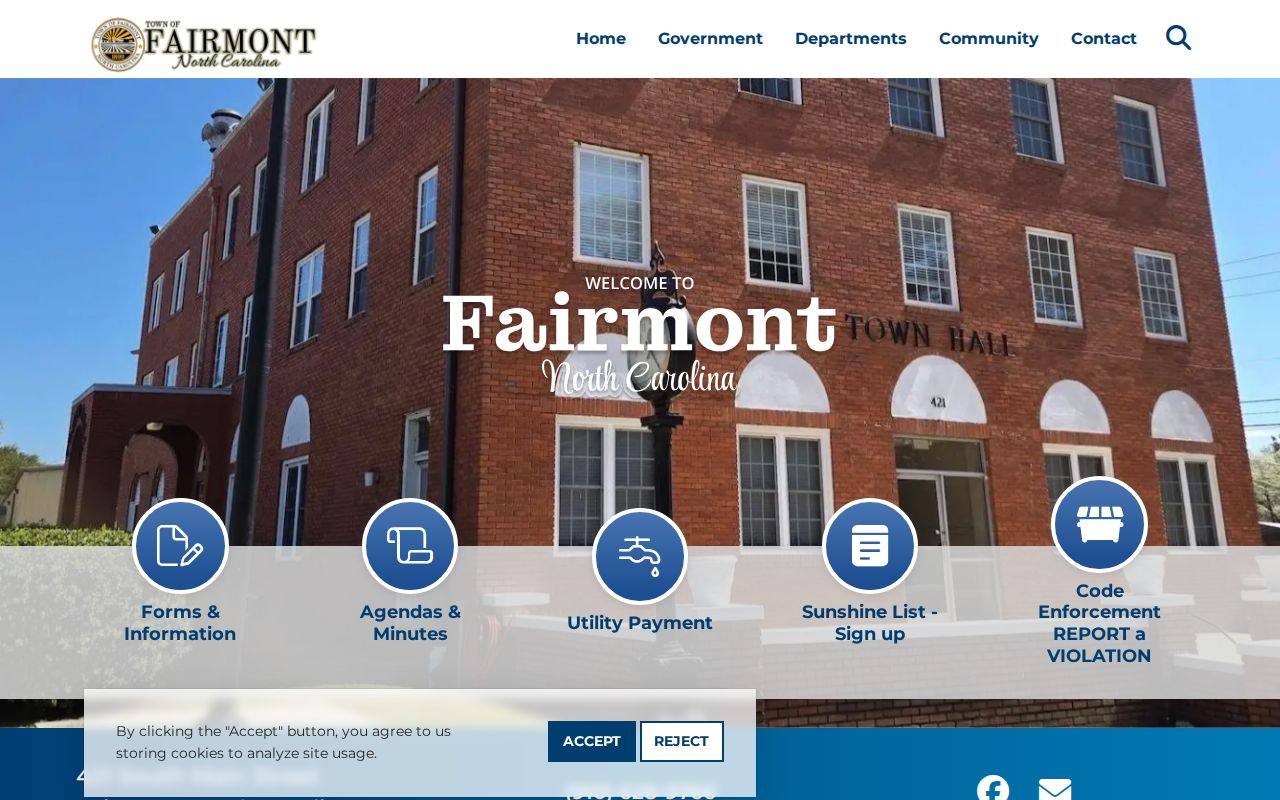
Fairmont sits in a bilingual corner of Robeson County. The Town Hall page reflects that local language boundary. It is not a Fairmont court docket, and it offers no case lookup.
Court Dates and Settings in Fairmont
Any Fairmont court date belongs to the court named on the record. Start there and confirm the county. For a Robeson case, two official state-court routes exist. One is Portal Search Hearings. The other is the Robeson schedule index. Settings move. A calendar hit shows a scheduled event only, never a hearing outcome.
| Record or citation number | Use the official Fairmont-related identifier to locate an available court record. |
|---|---|
| Court location | Verify the court and county before treating the returned setting as a Fairmont case. |
| Hearing date | Use Portal Search Hearings or an official calendar to confirm the current setting. |
| Search filters | Portal can use location, hearing type, search type, and date range, with criteria based on the selected search type. |
| Current attendance | Ask the relevant Clerk office or courtroom because Search Hearings does not show virtual or in-person status. |
Check the state calendar interface live, since its fields can change. The court publishes no separate Fairmont state-court calendar.
Fairmont Docket Calendar Check
The official Robeson County calendar links are state-court schedules, not a Fairmont city docket. For a Robeson criminal matter, the documented routes are the criminal calendar results channel and the local schedule index. The layout of a calendar page can change. Treat no fixed list of columns or filters as permanent.
Search by case number when you can. After the hearing search, review the Fairmont-related Case Summary. A calendar entry is a planned setting. A Case Summary lists recorded events and disposition entries. For an official copy, or a question about the held file, ask the clerk.
Fairmont calendar questions deserve a check close to the date. Assignments move. Portal Search Hearings lets you narrow by location and date range. Its search type can run on a record number, a party or business name, attorney information, a judicial officer, or a courtroom. The result is a scheduling view. It does not prove a hearing occurred or settle a final outcome.
No separate Fairmont state-court calendar exists in the official sources. The court named on the record, plus a current state calendar, remains the way to verify a Fairmont setting.
Traffic Tickets in Fairmont
Fairmont sits inside Robeson County. A traffic ticket written there usually lands in state court, not a city traffic docket. There is no standalone municipal citation system. The ticket itself tells you the court and the county. Those printed details control where the case goes. Start with the citation number in Portal where one shows. Then verify the court location and the next setting through the Case Summary page or the Clerk of Court.
Some tickets can be resolved without a court date. Whether yours qualifies depends on the citation and the current court materials. The state traffic-violations information lays out the official process. Never assume a Fairmont ticket is payable or waivable. Check the citation and the state-court route first.
Fairmont Court Record Civil Citation Path
Fairmont also has a local ordinance track for non-criminal matters. An official Fairmont civil-citation ordinance describes it. A civil citation under that ordinance may tell a person to appear at Town Hall or pay within 15 days. If the matter escalates, it can move forward as civil action in the General Court of Justice. Treat this as a municipal administrative step, not as a Portal case-status label.
If a General Court of Justice case follows, track it by its record number, court location, and county through Portal and the right Clerk. The ordinance alone does not set a penalty amount. It does not fix a Fairmont enforcement practice or place court files at Town Hall. The 15-day direction applies to what the ordinance covers, not to every citation in Fairmont.
Where Fairmont Cases Go
Not every Fairmont matter follows one path. An administrative question about a town ordinance stays with Fairmont municipal services at Town Hall. A citation or court case goes wherever the official record says it goes. When the named location is Robeson County, the state-court route runs through Portal and the Robeson Clerk. The Clerk keeps the court records.
Record flow: Fairmont town contact → municipal information; Fairmont civil citation → the directions on that citation; later state court case → named court and county → Portal and the appropriate Clerk.
Sometimes a citation tied to Fairmont names a different county or court. Follow that official location instead. A city name on a ticket never overrides the state-court identifier.
Fairmont Docket County Verification
A Fairmont docket search goes wrong most often when the county or record number is off. So verify both before digging deeper. Check any Portal result before treating it as the Fairmont record you want. Look at its location, case type, and status. A case number beats an address. A citation number beats a broad name search.
Robeson joined eCourts in 2025. Legacy information was converted into the Enterprise Justice system. Still, some older paper files may sit with the Clerk. For an aging Fairmont-related Robeson file, hand the Clerk the record number or your best date range. Do not assume Portal shows everything.
The Robeson County Courthouse handles state-court requests for a Robeson file, not Fairmont Town Hall. A sharp request names the record number, the case type, the document sought, and the date if known. That detail helps the Clerk. It tells an available Portal record apart from an older paper file or a request that needs a certificate.
Fairmont Court Record Access Rules
Who can see a Fairmont court record, and how? State law and Clerk custody rules decide, based on the court holding the file. In Robeson County, G.S. 7A-109 places court records, dockets, and indexes with the Clerk, with public inspection subject to legal limits. Portal gives you a way to search and view. It is not a certificate service, and it does not promise that every Fairmont-related record is public online.
State-court access rules:
G.S. 7A-109 makes the Clerk the record custodian and gives the public-inspection baseline.
G.S. 15A-153 addresses removal of applicable public entries after an expunction order.
G.S. 7B-3000 makes juvenile records confidential except as law or court order allows.
Need an official copy, a certificate, or something still held on paper? Go to the Clerk in the case county, not Fairmont Town Hall. The statewide court-records guidance puts case files with the Clerk in the county where the case is located. A broad Judicial Branch public-record request will not fill in for a Fairmont state court-file request. Give the Clerk the record number, the case type, the document you want, and the date if known. A request built on that detail routes far more easily than one built on a city name alone.
Fairmont Court Record Privacy Limits
State restrictions follow Fairmont-related cases into Portal too. Sealed and confidential material stays closed to ordinary public users. Juvenile matters are confidential by law. Some warrant, protective-order, and domestic-violence documents carry added limits. Being connected to Fairmont changes none of that. The juvenile-record confidentiality statute sets out this boundary in full.
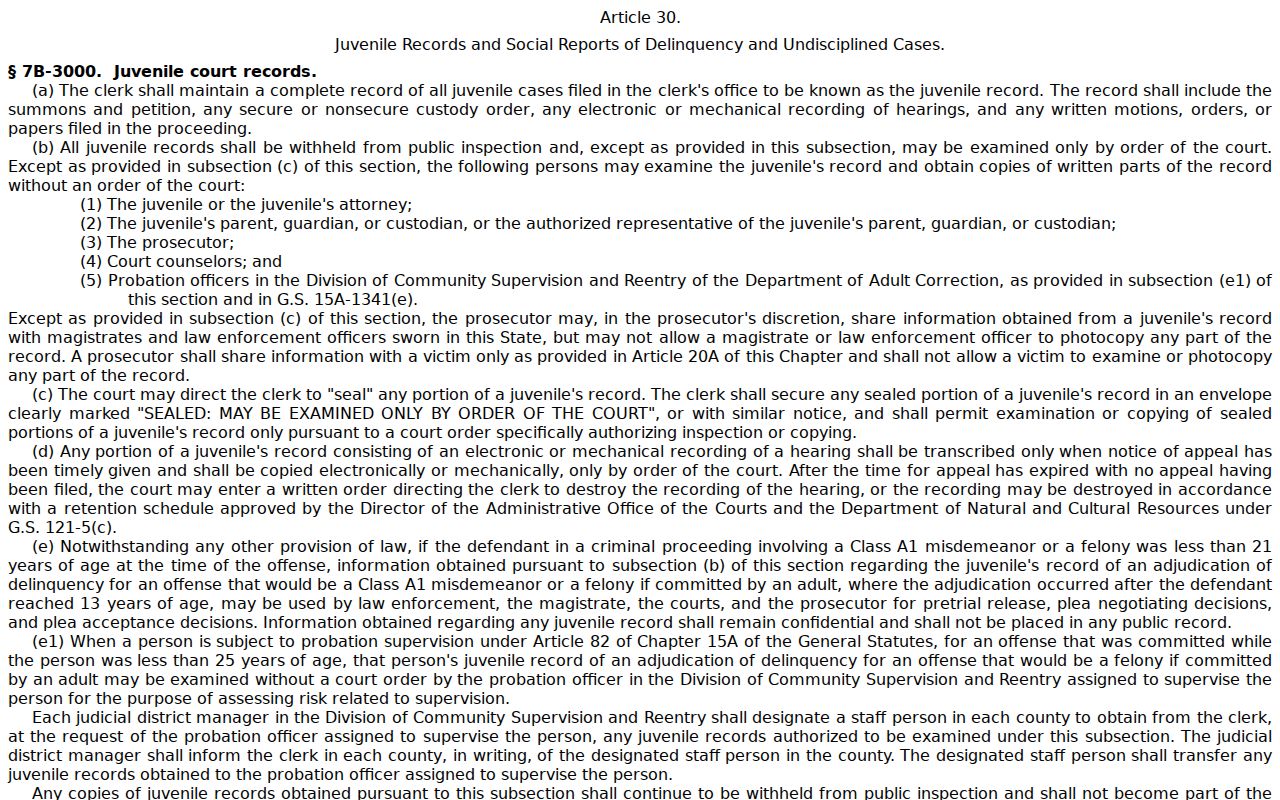
A missing Fairmont Portal result can mean several things: a restriction, processing delay, a different valid identifier, an older paper file, or a search that simply did not match. It does not tell you which.
Fairmont Court Record Federal Boundary
Federal court records live in a system apart from Fairmont and Robeson County state records. A state citation, a District Court or Superior Court matter, a magistrate case, or a Clerk-held file all start with Portal and the applicable state court. The Eastern District of North Carolina is the official entry point for federal district court matters.
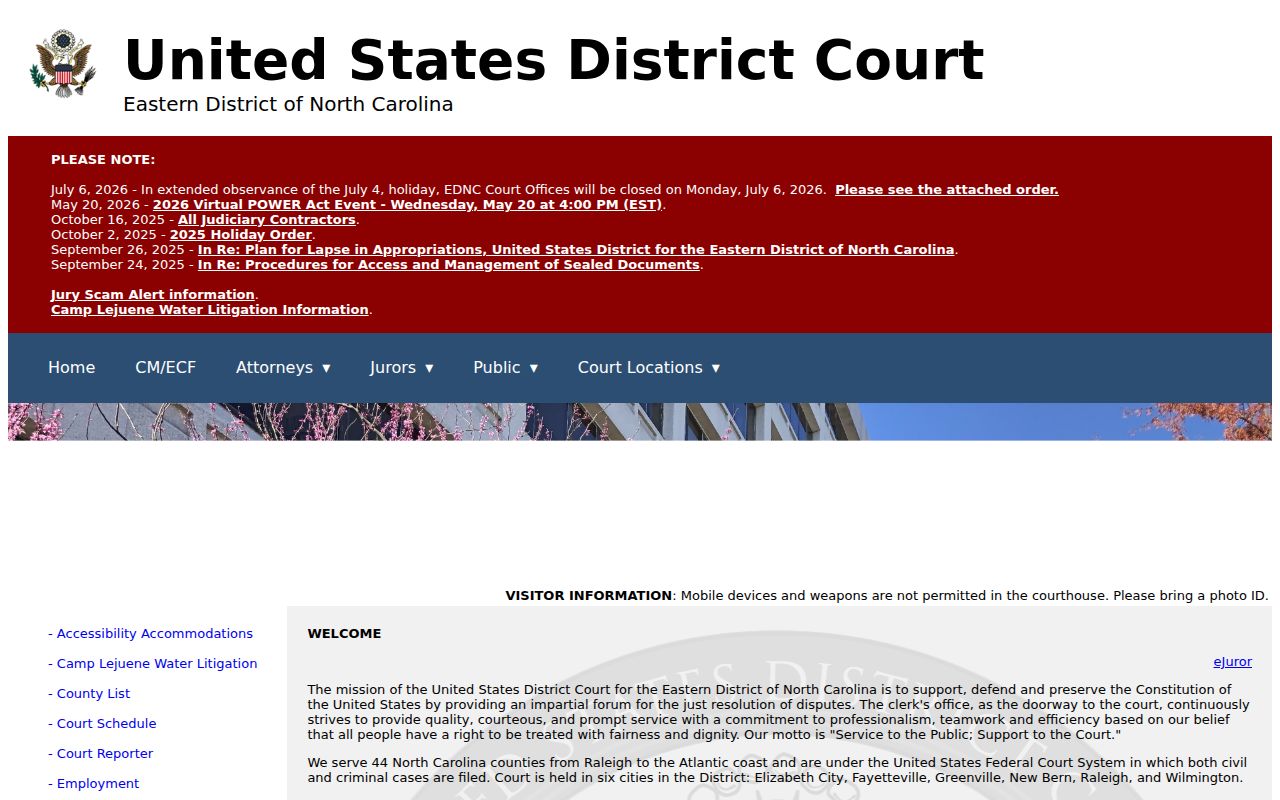
That federal entry page helps you recognize a separate system. It never replaces a Fairmont state-court docket search. The Eastern District of North Carolina Bankruptcy Court hearing-location page is federal information as well. It lists a Fayetteville hearing location, but that is not a promise that every Fairmont-related federal matter is heard there. Confirm the case's division, assigned location, and current calendar with the relevant federal court before relying on it.
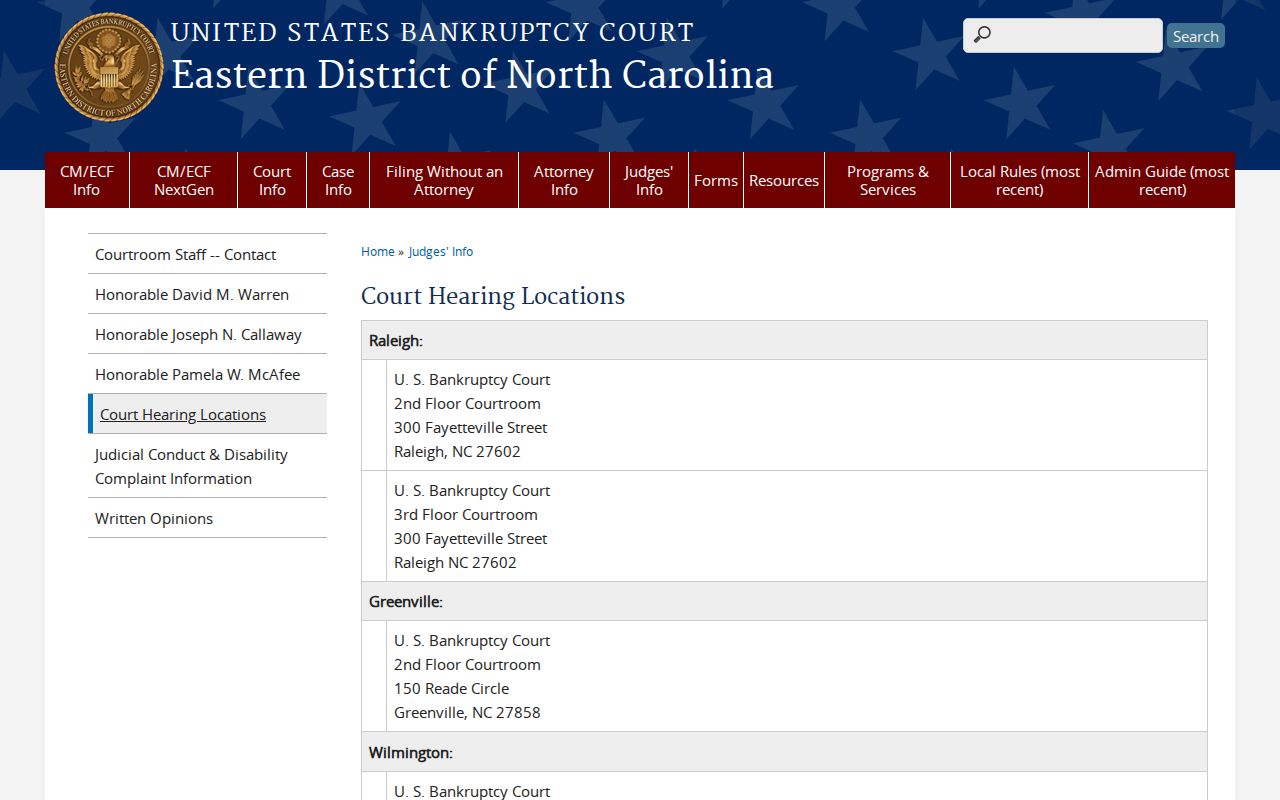
Keeping the federal boundary straight keeps a Fairmont state-court record out of the wrong search system.